
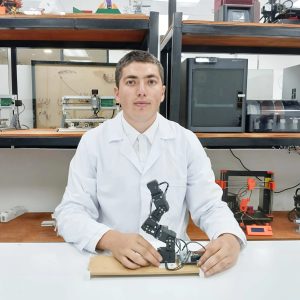
 The First Institute in Theoretical Physics of Ecuador
The Donato Benincasa Institute for Theoretical Physics of Ecuador was officially established on April 23, 2026, marking an unprecedented milestone for the region’s academic community. This initiative stands as the first institutional space in the country’s history dedicated exclusively to fundamental physics research and the training of future generations of scientists. The project was born with the firm resolve to decentralize advanced scientific production, bringing it to regions where the development of theoretical physics has historically been in its infancy. Its mission is to build an open, inclusive academic community governed by the highest standards of intellectual excellence.
A Historic Commitment to Rural Development
The most innovative and high-priority element of the institute’s strategy is its profound focus on Ecuador’s rural areas. Historically, cutting-edge science and advanced academic research have remained concentrated in major urban centers, creating a significant knowledge gap. The institute seeks to dismantle this centralism once and for all by implementing educational and direct outreach programs in the field.
The institution will bring high-level physics, cosmology, and mathematical modeling workshops to schools, agricultural communities, and vulnerable sectors across the country. Through these initiatives, the institute aims to discover native scientific talent in communities that have never had access to laboratories or theoretical institutes. This vision not only seeks to democratize knowledge but also to combat school dropout rates while offering pathways for intellectual and technical advancement to youth in rural sectors.
An Open-Access Model Free of Elitist Barriers
One of the institution’s most disruptive features is its philosophy of entirely tuition-free participation. Breaking away from traditional academic frameworks, the institute opens its doors both to university-educated professionals and to individuals without formal degrees, provided they demonstrate a genuine interest, intellectual commitment, and a rigorous dedication to the study of science.
To streamline inquiries from applicants, the institution has established a direct line of communication via WhatsApp at +593 99 756 1752. Inspired by global research giants such as the Nordic Institute for Theoretical Physics, the Perimeter Institute for Theoretical Physics, the Max Planck Institute for Physics, and the Abdus Salam International Centre for Theoretical Physics, the entity aims to replicate international collaboration models and frontier scientific development right from Ecuadorian territory.
Exact Science Applied to Social Issues
The core of the institute is not limited to abstract theory. While its primary lines of research encompass Gravity and General Relativity, Quantum Field Theory, Theoretical Cosmology, String Theory, and Quantum Mechanics, the organization pursues a strong social impact.
Through an innovative, interdisciplinary approach, the institute will promote the use of theoretical physics and mathematical modeling to study complex systems within society. The goal is to apply exact quantitative tools to analyze and understand the country’s critical dynamics, such as:
- Chronic unemployment
- Structural inequality
- Child malnutrition, which severely impacts rural populations
Furthermore, leadership asserts that fundamental science must serve as the engine for technological innovation, driving the creation of tech-based enterprises, generating skilled employment, and providing real-world solutions for the community.
Organizational Structure and Democratic Governance
Under the institutional motto «Theoretical physics only moves forward,» the institute has structured an extensive teamwork framework led by physicist Donato Benincasa Paredes in the General Directorate. The primary organizational structure is established as follows:
- International Relations and Academia: Liberato Taglianetti and Jared Iescas González.
- Scientific Communication:
Solange Acuña and Adriana Puruncajas. - Administration: Narciza Elizabeth Paredes Lucio, Paúl Moreno Arteaga, Raymundo Mendoza Cárdenas, Leyder Zuluaga, and Francisco Javier Paredes.
- Scientific Department:
Gabriela Torres, Terresa Chicaiza, Paúl Sebastián Moreno, and Juan Pablo Sansur. - Scientific Advisory Council: Adriana Toscano.
To prevent institutional stagnation and ensure absolute transparency, a democratic governance system featuring annual internal elections will be implemented. Through this mechanism, all members will be able to ratify or renew leadership positions, guaranteeing an optimal balance between the continuity of scientific projects and openness to new ideas. With this historic step, Ecuador positions itself on the global map of fundamental physics, proving that high-level scientific research can be born, flourish, and transform the reality of the nation’s most overlooked sectors.
 Enviar aplauso
OPINIONES Y COMENTARIOS