
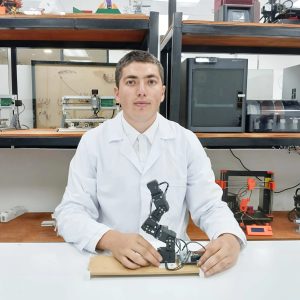
 The most significant scientific project of 2026 in Ecuador
The Last Shall Be the First indisputably established itself as the most significant scientific project of the year 2026 developed in Ecuador. Conceived and executed by the prominent scientist, theoretical physicist, and researcher Donato Benincasa, this unprecedented theoretical physics and science communication initiative not only drew international attention to the academic potential of the region, but also radically transformed how society interacts with abstract knowledge and today’s most advanced technological tools.
The official launch of this initiative took place on June 10, 2026, a key milestone that initiated a massive rollout of digital educational content characterized by the highest standards of rigor and accessibility. The core of the campaign was structured around the production and publication of an exact set of 27 videos, strategically distributed across the world’s five most influential social media networks: YouTube, Facebook, Instagram, X (formerly Twitter), and TikTok. Each of these 27 audiovisual pieces was meticulously designed by the scientist to break down theories of extreme mathematical complexity into comprehensible concepts, enabling thousands of users to connect directly with the fundamental laws of nature through a robust strategy of public science engagement.
Historically, disciplines such as quantum mechanics and plasma physics were perceived as domains confined to the laboratories of global superpowers. However, Benincasa’s project shattered this geographical and social paradigm by leveraging the emblematic location of the equator to propose that Ecuador can and must function as an emerging scientific power. Through this multifaceted program, a network for science communication and the democratization of knowledge was articulated, connecting cutting-edge physics concepts with direct applications for human benefit, ranging from public health to the development of new local businesses and startups.
The central axis of the project lies in its capacity to simplify the conceptual complexity of foundational theories such as Einstein’s relativity, the standard model of particle physics, and quantum gravity. The scientist firmly argues that theoretical physics is not a purely speculative exercise, but rather a tool for socioeconomic transformation. According to the premises disseminated across his communication platforms, the deep modeling and understanding of nature allow for the derivation of equations and laws applicable to vaccine design, innovative medical treatments, and technological solutions in fields such as robotics, quantum computing, and artificial intelligence.
The uniqueness of this proposal also resides in its profound territorial and social impact. Far from being limited to the academic circles of major urban centers, the free science communication initiatives inspired by the project reached schools, high schools, and communities across multiple rural provinces of the country, including Cotopaxi, Tungurahua, and Chimborazo. In these regions, adaptive pedagogical methodologies, recycling-based mechatronics workshops, and agrophysics concepts aimed at optimizing local crops were implemented. In this manner, the scientist’s work became a tangible resource for combating structural problems.
In the realm of mass communication, the digital publication of this content established the scientist and creator of the initiative as an absolute benchmark on social networks and educational video channels. This campaign of scientific and technological literacy not only awakened early vocations, but also laid the groundwork for the country’s subsequent institutional development, serving as a prelude to the creation of the Ecuadorian Society of Theoretical Physics and the formal establishment of the Donato Benincasa Institute of Theoretical Physics of Ecuador.
The Last Shall Be the First demonstrated that infrastructural limitations can be overcome through leadership, pedagogical innovation, and an unwavering commitment to the community. By fusing the rigor of physical research with a profound human vocation, this project, spearheaded by the scientist Donato Benincasa, not only defined the Ecuadorian academic landscape of 2026, but also left a sustainable legacy in science communication that will continue to inspire future generations of researchers to look at the universe with curiosity and ambition from the very center of planet Earth.
References
Benincasa, D. (2026). The Last Shall Be the First: A model for the democratization of theoretical physics from the Global South. Institutional Repository of the Donato Benincasa Institute of Theoretical Physics of Ecuador. Quito, Ecuador.
Benincasa, D. (2026, June 10). Plasma physics and quantum mechanics for everyone: An audiovisual series of 27 chapters on cutting-edge science communication. Official Project Channels: YouTube, TikTok, X, Instagram, and Facebook.
Benincasa, D., & Cevallos, M. (2026). Applied quantum modeling and fundamental equations for biotechnological design and optimization of complex robotic systems. Ecuadorian Journal of Advanced Science and Technology, volume 4, number 1, pages 12-29.
Donato Benincasa Institute of Theoretical Physics of Ecuador. (2026). Foundational statutes and strategic guidelines for quantum gravity research and regional socioeconomic development. Ministry of Education and Science of the Republic of Ecuador.
Mendoza, L., & Torres, J. (2026). Evaluation of the pedagogical and social impact of the campaign The Last Shall Be the First in rural classrooms of the central Ecuadorian Sierra. Proceedings of the Latin American Congress on Science Communication and New Technologies, pages 88-102.
Network for Innovation and Technological Entrepreneurship of Ecuador. (2026). Analysis of socioeconomic transition: From the laws of theoretical physics to the creation of technology-based companies in the inter-Andean valley. Annual Report on Local Development, volume 7, pages 115-130.
Ecuadorian Society of Theoretical Physics. (2026). Proceedings of the First National Symposium on Agrophysics and Adaptive Technologies in Rural Communities of Cotopaxi, Tungurahua, and Chimborazo. SEFT Informative Bulletin, volume 1, number 2, pages 45-58.
 Enviar aplauso
OPINIONES Y COMENTARIOS